
Roof Replacement Cost in Ventura County: What Drives the Price
Roof replacement cost in Ventura County comes down to a few measurable things: the size and pitch of the roof, the material, how many old layers come off, how much decking needs replacing, and the code rules for your address, such as fire rating, cool-roof rules and permit fees. A measured roof and a line-item written estimate turn those into your actual price.
Infinity Roofers Inc. replaces roofs across Ventura County and Los Angeles County, with locations in Simi Valley, Canoga Park and Pasadena. For a measured, written estimate on your home, send us your address through our contact page.
You will not find a price-per-square-foot chart here. A number from another city or another year says little about your roof. The drivers below are what actually move a quote, and once you know them you can read any estimate line by line and compare two bids fairly.
How is a roof replacement measured and priced?
Roofers measure the roof surface, not the floor plan. The unit is the “square”, 100 square feet of roof. A pitched roof with overhangs has more surface than the floor area under it, and every hip and valley adds cut pieces and waste, so two houses with the same floor area can need very different amounts of material.
Then come the factors that change labor per square:
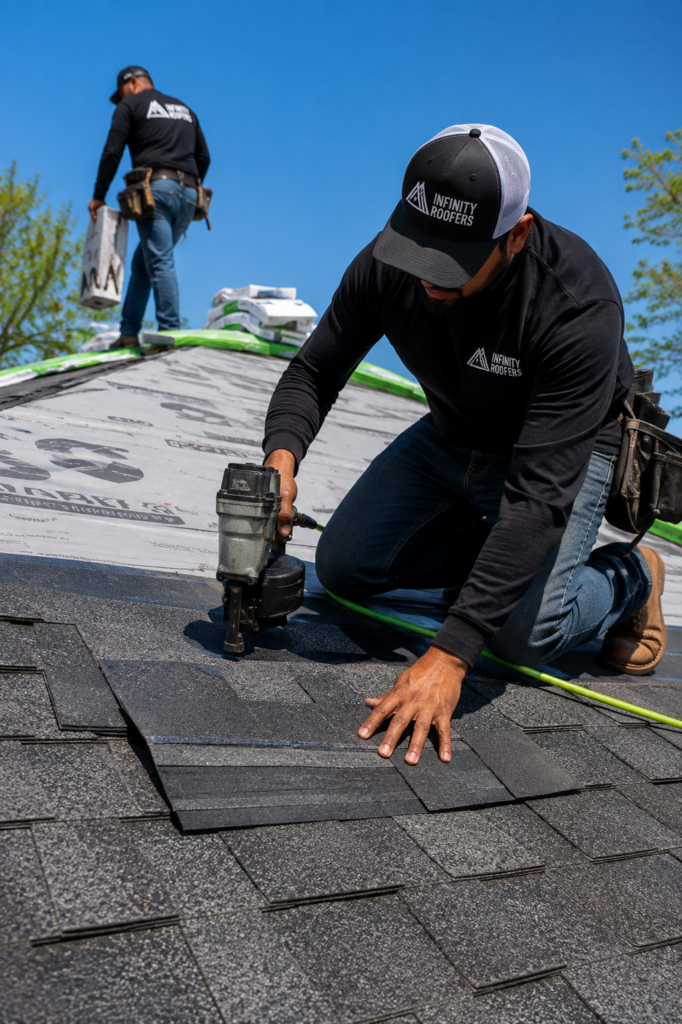
- Pitch. A steeper roof is slower and needs more safety setup. The California Energy Code treats a roof with a rise of 2 in 12 or more as steep-sloped; anything flatter is a low-slope roof, which is a different system with different rules (see flat roofs below).
- Height and access. A second story, a tight side yard or a pool under the eaves makes it harder to move material up and old roofing down.
- Complexity. Dormers, multiple ridges, chimneys and skylights each need cutting and flashing.
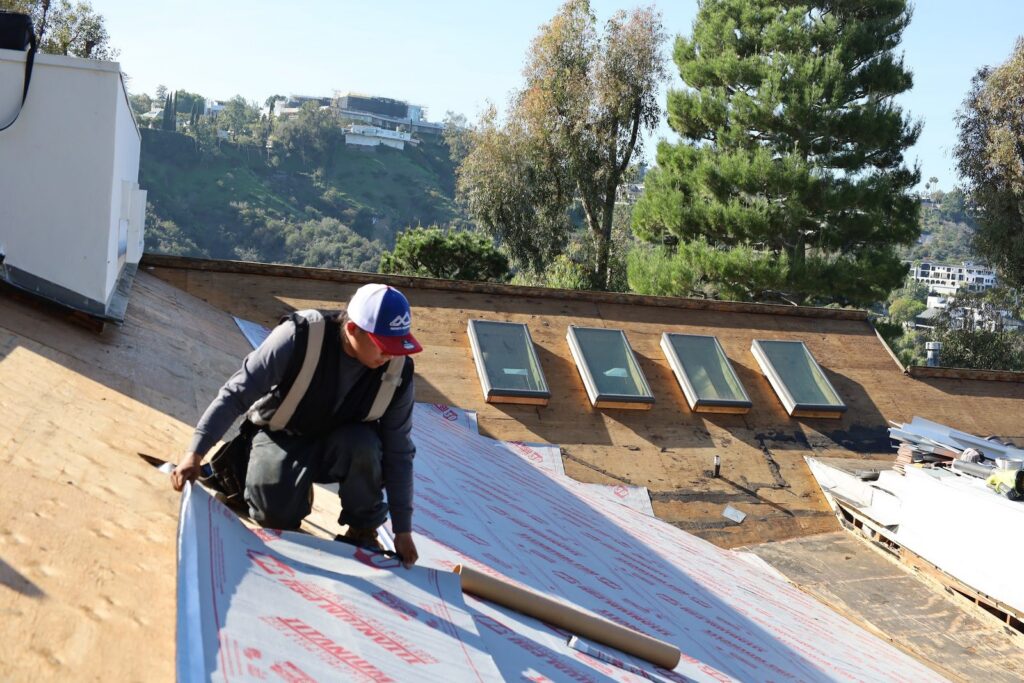
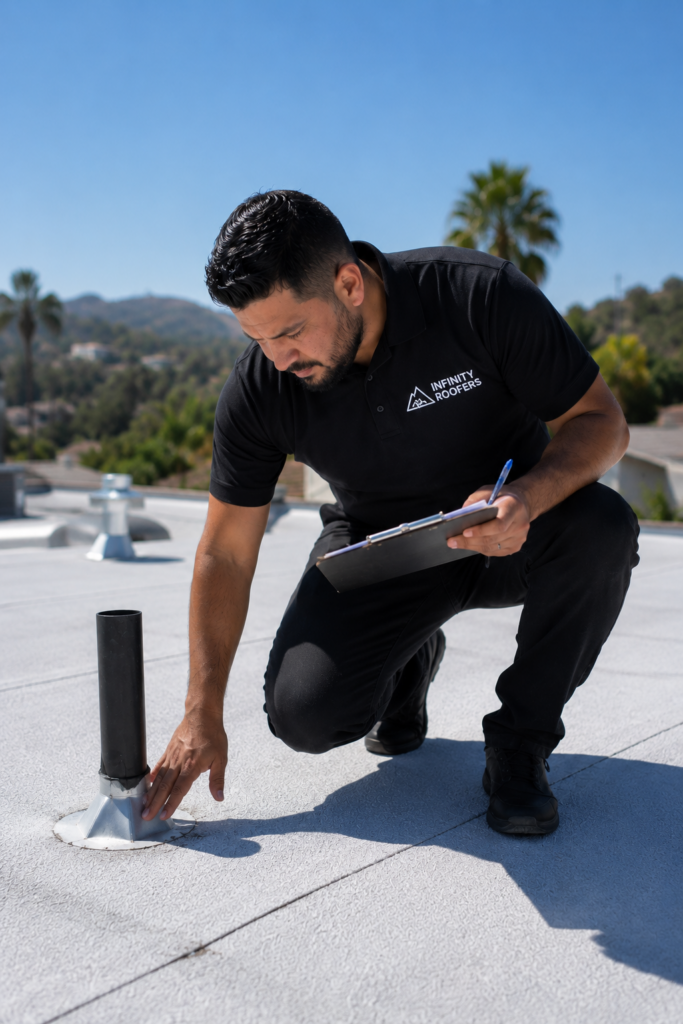
- Penetrations. Vents, pipes, skylights and HVAC equipment are common leak points, so each one is flashed again on a new roof.
Material: the biggest single choice in the price
The systems we install are asphalt shingles, tile, metal and flat (low-slope) roofs. Each has its own cost drivers, and a fair comparison between quotes only works when both quote the same system at the same level.
Shingle roof replacement cost
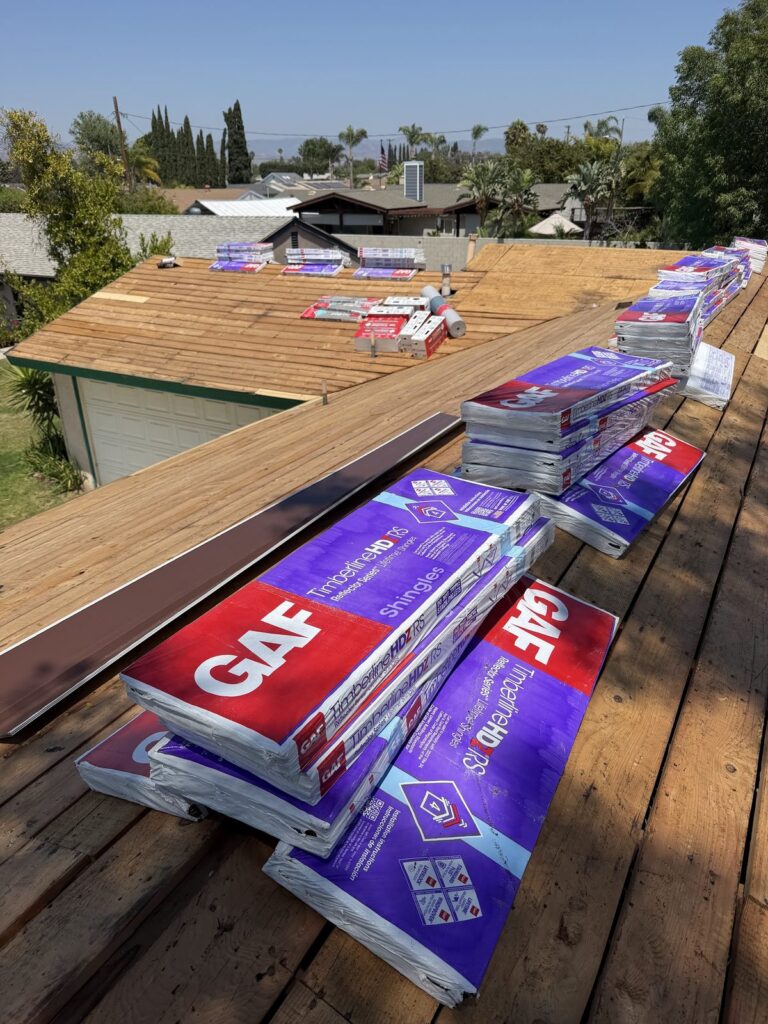
Within asphalt shingles, the price moves with the product line, the underlayment, the starter, hip and ridge pieces, and the ventilation parts. Shingles need a solid deck under them, so the condition of the boards under the old roof matters (more on that below). On the Department of Insurance’s Safer from Wildfires list, most roofs qualify as Class A, asphalt shingles included. Inside a fire hazard zone, the code looks at the whole roof assembly rather than the shingle alone, and the valleys need their own metal and cap sheet (see the fire rules below).
In Simi Valley, Thousand Oaks, Moorpark and the other climate zone 9 towns in the table further down, a replacement of more than half the roof must use a product with a minimum solar reflectance unless the house meets one of the code’s exceptions. That can narrow the colors and lines you can choose from, so ask the roofer to confirm the product’s rating before you fall in love with a dark color.
Tile roof replacement cost
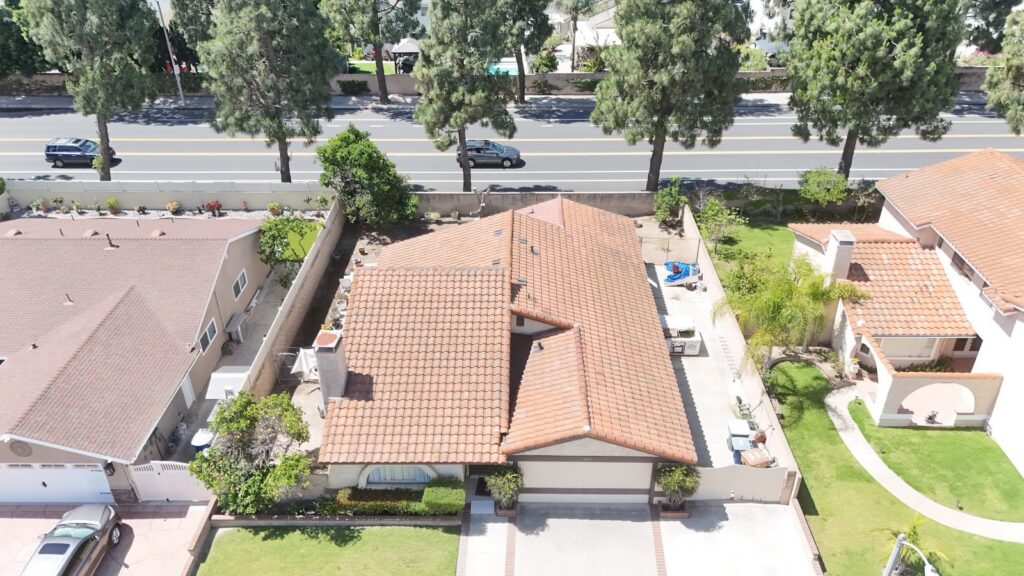
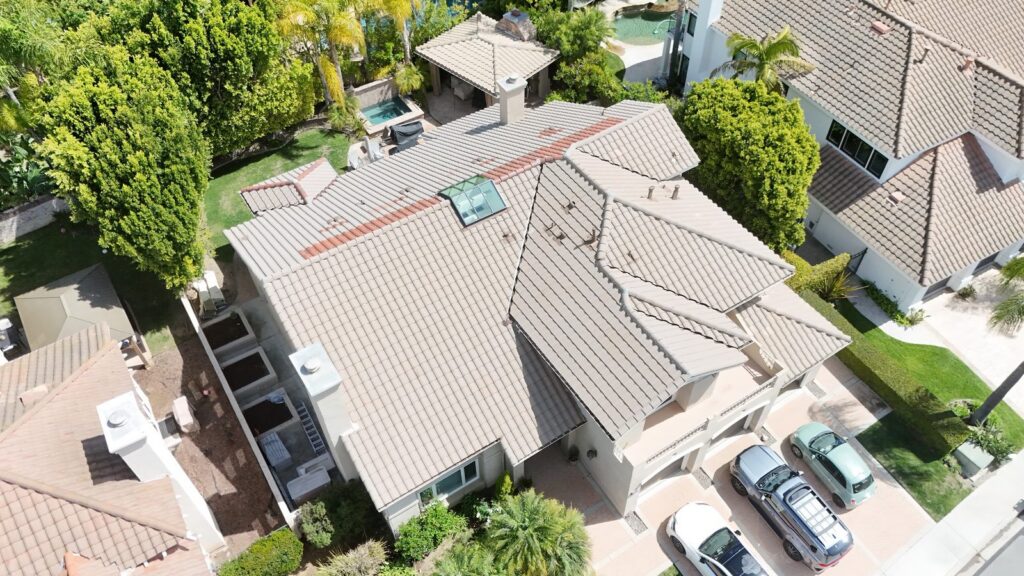
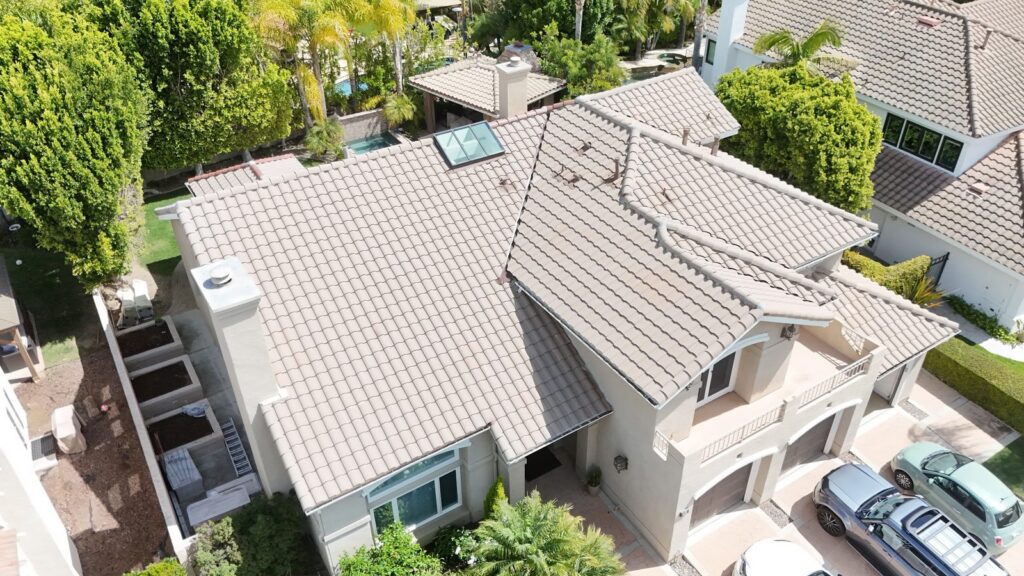
Tile jobs come in two very different scopes. A new concrete or clay tile roof is one price. Lifting sound existing tile, replacing the underlayment and resetting the same tile is a different scope, and the code allows it: existing clay or cement tile may be reinstalled, but damaged, cracked or broken tile may not. How many replacement tiles you need, and whether they can be matched, drives that price.
Tile is heavy, and the code requires the roof structure to carry the roof covering and the loads during installation. In Simi Valley, a reroof permit for brand-new roof tile is submitted with the tile’s ICC report. One cost break worth knowing: roof constructions weighing at least 25 pounds per square foot are exempt from the steep-slope reflectance minimum in the Energy Code.
Fire zones add layers under the tile. Clay or concrete tile counts as Class A on its own only over a noncombustible deck. Over the wood deck most homes have, the curved profile leaves an airspace that embers can reach, so in a fire hazard zone the code calls for a 72 lb mineral-surfaced cap sheet over the deck or an underlayment tested as part of a Class A assembly, plus bird stops at the eaves and hip and ridge caps mudded in. Those are material and labor lines a tile roof outside a zone may not carry.
Metal roof cost
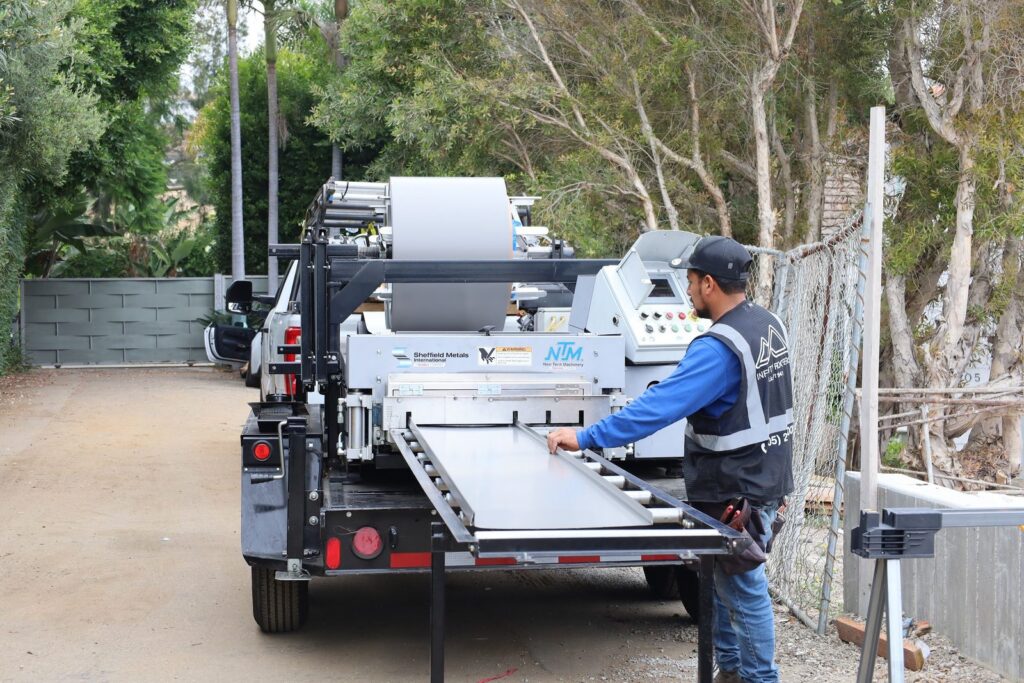
Metal is priced by the panel or shingle profile, the finish, and the trim and flashing work at every edge and penetration. Some standing-seam systems are built as complete, separate roofs that carry their loads straight to the structure, and the code lets those go on without removing the old roofing. Whether skipping the tear-off is a good idea on your house is a question for the inspection.
The Department of Insurance lists metal shingles and sheets among roofs that qualify as Class A; in a fire hazard zone, metal over a wood deck still has to be installed as a tested Class A assembly, and profiles that leave a gap under the panel need the same ember protection as tile.
Flat roof replacement cost
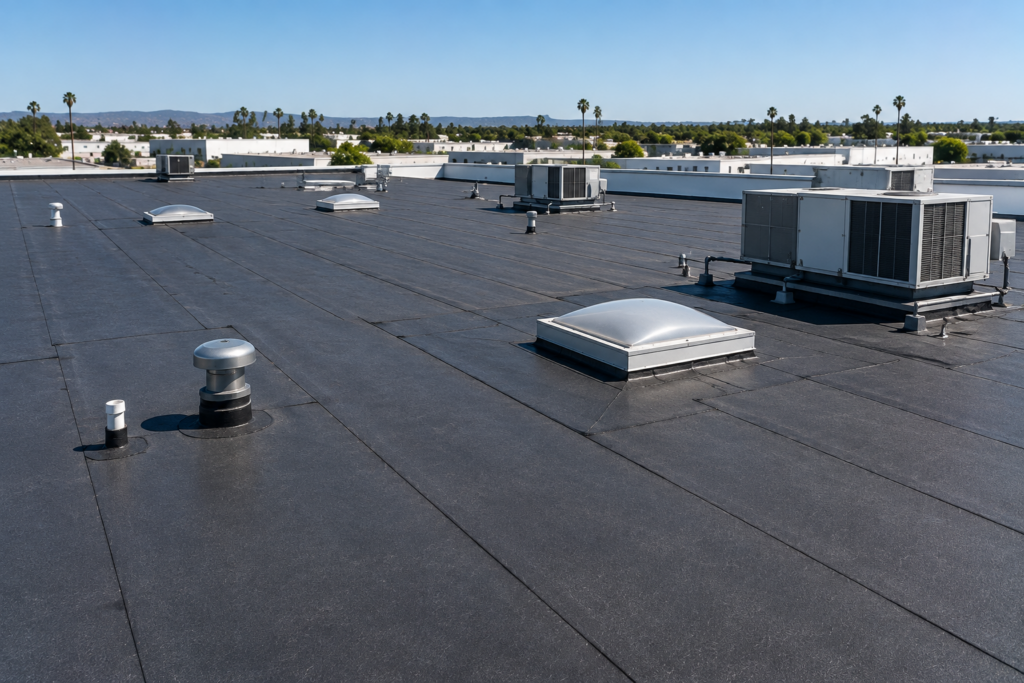
Low-slope roofs, found on many commercial buildings and on some homes, additions and patio covers, are where the local code changes the price most. When more than half of a low-slope roof on a single-family home is replaced, the 2025 Energy Code requires a highly reflective roof product in climate zones 4 and 6 through 15, which covers every town in the table below.
Two exceptions can lift that: continuous insulation at the roof deck can stand in for reflectance (the code’s trade-off table drops the reflectance requirement entirely at R-10 in zones 6 and 7, and at R-24 in zone 9), and roof constructions weighing at least 25 pounds per square foot are exempt.
In climate zone 9 the same rule also requires continuous insulation of R-14 at the roof, unless the existing roof already has R-10 continuous insulation or R-19 between the rafters against the deck, or unless rooftop equipment or wall flashing heights make the full thickness impractical (the code then allows R-4). Climate zone 6 has no added insulation requirement from that table.
In plain terms: the same flat roof can cost more in Simi Valley or Thousand Oaks than in Oxnard or Camarillo, because of insulation, not labor rates. Drainage counts too. The code does not require you to rebuild slope or add overflow drains on a reroof when the roof already drains, but ponding areas still need to be fixed for the new roof to last.
Which Ventura County code rules change the price?
Three sets of rules depend on where the house is: the fire rules, the cool-roof and insulation rules, and the permit itself. The fire and energy rules both look at how much of the roof is replaced. The energy rules apply when more than half of the roof is replaced; inside a fire hazard zone, the fire rules apply when half or more is replaced within 12 months, and to every repair.
Fire rating for your address
The 2025 California Residential Code (section R902.1.1), in force since January 1, 2026, sends roofing on a house in a Fire Hazard Severity Zone or a wildland-urban interface area to the California Wildland-Urban Interface Code (Title 24, Part 7). That code covers every fire hazard zone in state responsibility areas, the High and Very High zones inside cities, and areas a city or county designates itself; the building department confirms whether your address is in scope. Its roofing rules are cost lines:
- Class A roof assembly (section 504.2). The assembly is tested and rated as a whole. Tile and metal count as Class A without testing only over a noncombustible deck; over a wood deck, the listed assembly decides.
- Ember protection where the covering leaves a gap (504.2.1). Under tile and similar profiles over a wood deck: a 72 lb cap sheet over the deck or an underlayment tested for Class A, bird stops at the eaves, and hip and ridge caps mudded in.
- Valleys (504.2.2). Corrosion-resistant metal of at least 26 gauge over a 36-inch-wide 72 lb cap sheet running the full length of the valley.
- The 50 percent rule (507.1). A roof covering that is replaced, or has 50 percent or more replaced in a 12-month period, must meet the rules for new construction, and any roofing added in a repair must be at least Class A.
Outside the zones, the floor is lower. The Residential Code (R902.1.2) requires at least Class C for the entire roof covering when more than 50 percent of the roof area is replaced within one year, and the Health and Safety Code (section 13132.7) sets the statewide minimum by area. In every case the installer has to give the owner a certificate of the roof covering’s fire class from the manufacturer or supplier. Cities and counties may set stricter rules.
This is a real factor in eastern Ventura County. A grid sample of CAL FIRE’s current fire hazard maps across each city’s boundary gives these shares of city land:
| City | Very High | High | Moderate |
|---|---|---|---|
| Moorpark | about 80% | about 8% | about 5% |
| Thousand Oaks | about 70% | about 6% | about 5% |
| Simi Valley | about 65% | about 6% | about 4% |
| Camarillo | about 15% | about 4% | about 6% |
| Oxnard | none | about 4% | about 1% |
Your own address is what counts: look it up on the State Fire Marshal’s fire hazard zone viewer. The Department of Insurance says wood shake shingles are not Class A, so they do not meet the rule. On a tile or other profiled roof in Simi Valley, Thousand Oaks or Moorpark, two bids for the same house can differ by exactly the cap sheet or rated underlayment, the bird stops, the mudded caps and the valley metal, so check that every bid names them.
Cool-roof and insulation rules by town
The 2025 California Energy Code applies to permit applications made on or after January 1, 2026. Its section 150.2(b)1I covers roof replacements on existing single-family homes when more than half of the roof is replaced. The climate zone decides what applies. The table uses the Energy Commission’s own ZIP code list; where a ZIP code crosses a zone line, the building department has the final word.
| Town (ZIP codes checked) | Climate zone | Steep-slope roof (shingle, tile, metal) | Low-slope (flat) roof |
|---|---|---|---|
| Simi Valley (93063, 93065) | 9 | Minimum reflectance unless an exception applies | High reflectance plus R-14 continuous insulation, with exceptions |
| Thousand Oaks (91360, 91362) | 9 | Minimum reflectance unless an exception applies | High reflectance plus R-14, with exceptions |
| Moorpark (93021) | 9 | Minimum reflectance unless an exception applies | High reflectance plus R-14, with exceptions |
| Westlake Village (91361), Agoura Hills (91301), both in Los Angeles County | 9 | Minimum reflectance unless an exception applies | High reflectance plus R-14, with exceptions |
| Ojai (93023), Santa Paula (93060), Fillmore (93015) | 9 | Minimum reflectance unless an exception applies | High reflectance plus R-14, with exceptions |
| Newbury Park (91320) | 6 | No reflectance minimum | High reflectance, with exceptions; no added insulation from the table |
| Camarillo (93010, 93012) | 6 | No reflectance minimum | High reflectance, with exceptions; no added insulation from the table |
| Oxnard (93030, 93033, 93035), Ventura (93001, 93003, 93004) | 6 | No reflectance minimum | High reflectance, with exceptions; no added insulation from the table |
| Malibu (90265), Los Angeles County | 6 | No reflectance minimum | High reflectance, with exceptions; no added insulation from the table |
The steep-slope minimum in zone 9 (an aged solar reflectance of 0.20 and thermal emittance of 0.75, or an SRI of 16) does not apply when the house already has R-38 ceiling insulation, a qualifying attic radiant barrier, no ducts in the attic, or R-2 continuous insulation at the roof deck, or when the roof weighs at least 25 pounds per square foot. If your attic already meets one of these, the reflectance minimum no longer limits your color choice. Ask your roofer to check before the product is ordered, because the answer can change the product and the price.
Permit and inspection fees
Every full replacement needs a building permit, and the fee is set by whoever issues it: the city for addresses inside Simi Valley, Thousand Oaks, Moorpark, Camarillo, Oxnard, Ventura and the other incorporated cities, and Ventura County Building and Safety for unincorporated areas, where the county offers an online permit fee estimator. Our roof replacement permit guide explains who issues the permit for each town, how long it takes and what the inspector checks.
Tear-off, decking and the lines that can change after work starts
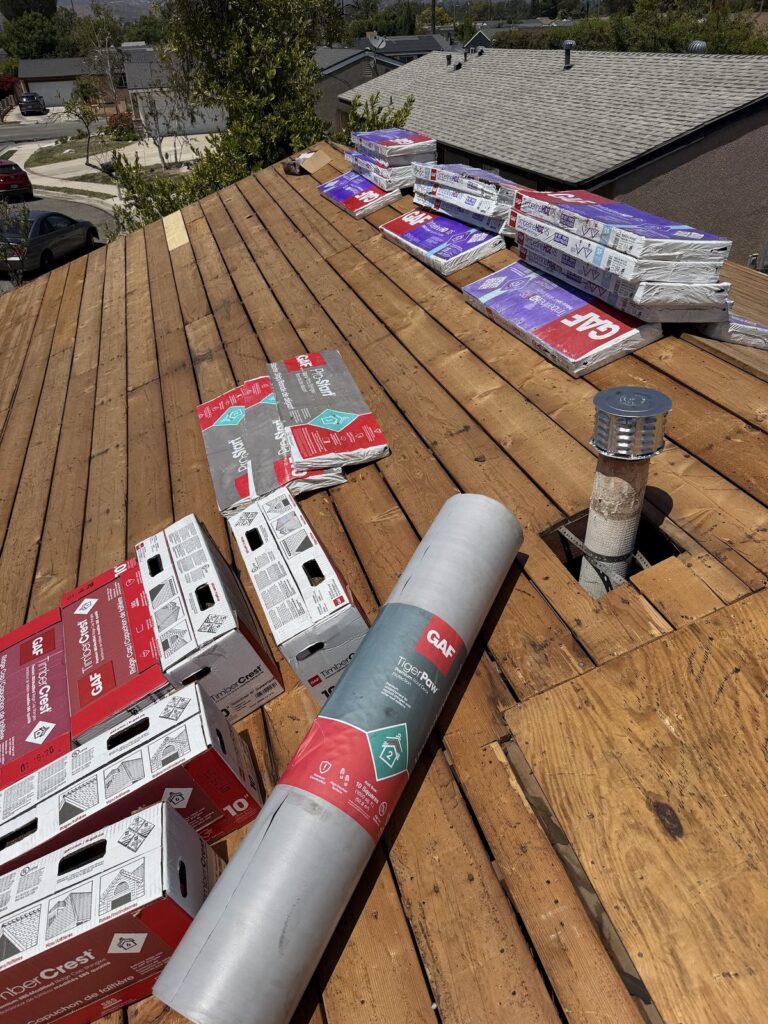
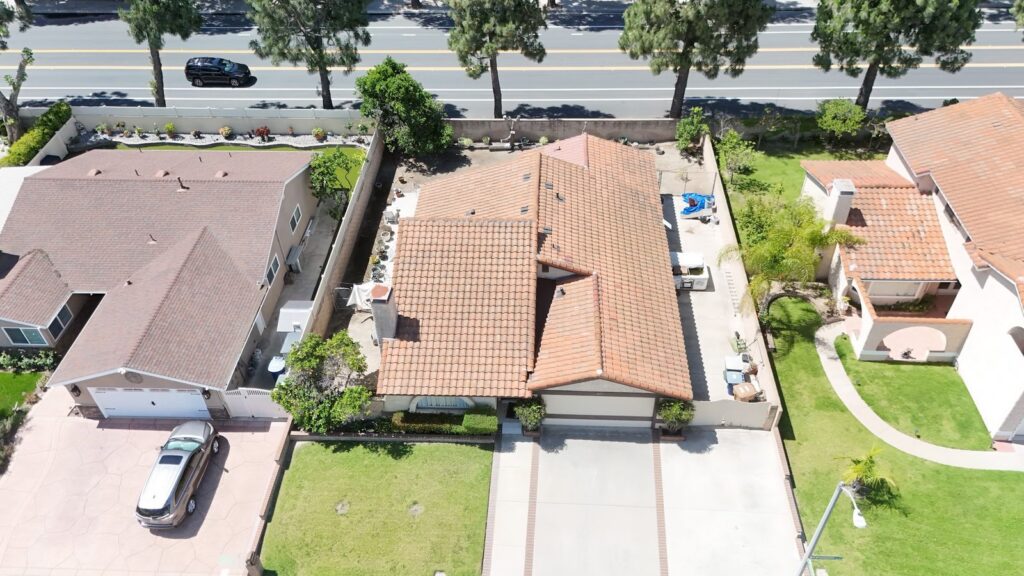
Under the California Residential Code, a roof replacement removes the existing layers of roofing down to the roof deck. Laying a new roof over the old one is a different job, a “recover”, and it is not allowed when the old roof is water soaked or deteriorated, when it is slate, clay or cement tile, or when it already has two or more layers. Each layer that comes off adds labor and disposal.
What sits under the old roof is the main reason a price can move after the job starts:
- Damaged decking. Soft, rotted or delaminated sheathing only shows once the roofing is off. A clear quote states a price per sheet replaced, so you know the cost before anyone climbs up.
- Spaced boards. Older roofs sometimes sit on spaced boards instead of solid sheathing. The code requires asphalt shingles to be fastened to structural panels or solid lumber sheathing, so spaced boards get new sheathing first.
- Flashing, vents and edge metal. The code requires flashings, edgings, vents and similar parts to be replaced where they are rusted, damaged or deteriorated.
- Inspection timing. Work that must be inspected cannot be covered before the inspector approves it, so a deck inspection may happen before the underlayment goes on.
What the age of local homes means for your quote
Much of the housing in eastern and central Ventura County is decades old. In the Census Bureau’s 2024 American Community Survey (5-year estimates), the median year built for housing units is 1980 in Simi Valley, 1978 in Thousand Oaks, 1977 in Oxnard, 1982 in Camarillo and 1987 in Moorpark. About half of the housing units in each city were built before that year.
For a quote, age means more chances of previous roof layers, original decking and flashing at the end of its life, and attic insulation that may or may not meet the cool-roof exceptions above. None of these is a reason to replace on its own, but each one is a line your estimate should address in writing.
How to read and compare roof replacement quotes
Two quotes for the same house are only comparable when they describe the same job. Check that each one states:
- The measured roof area in squares and the pitch.
- The roofing product by maker, line and color, its fire class, and its cool-roof rating where your climate zone requires one.
- For a house in a fire hazard zone, how the bid meets the Class A assembly: the cap sheet or Class A-tested underlayment under tile or other profiled roofing, bird stops, mudded hip and ridge caps, and the valley metal.
- How many layers come off, and how disposal is handled.
- The price per sheet of decking if replacement is needed.
- Underlayment, flashing, vents, edge metal and ridge or hip pieces.
- For flat roofs, the insulation the Energy Code requires at your address.
- Who pulls the permit, whether the fee is included, and who attends the inspections.
- The schedule, cleanup, the final walkthrough and the warranty documentation you receive.
California law adds a few protections. The Contractors State License Board says a home improvement contract over five hundred dollars in labor and materials must be in writing, and it should state the work, the price, when payments are made, who gets the building permits and when the job will be finished, along with the contractor’s address and license number.
The down payment should never exceed 10 percent of the contract price or one thousand dollars, whichever is less, unless the contractor has a Blanket Performance and Payment Bond on file with the board. You can check any contractor’s license on the CSLB license lookup; Infinity Roofers Inc. is California Licensed Contractor #1134192.
Is a repair the cheaper, honest answer?
Sometimes. When the damage is limited to one area, the rest of the roof is sound and the deck under it is solid, a repair can be the right call, and a replacement should not be recommended automatically. When leaks keep coming back after repairs, damage is spread across the roof or the materials are curling, cracking or missing, replacement usually makes more sense. Our roof repair page covers what we fix, and the roof replacement page explains the full replacement process.
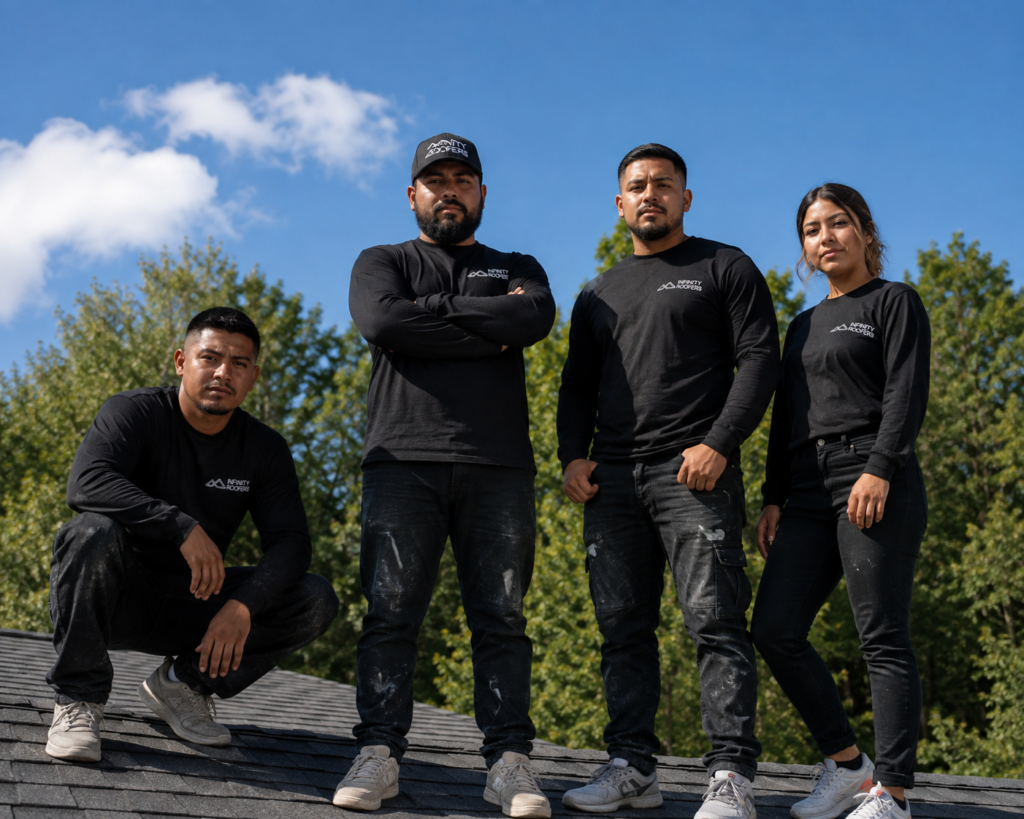
How Infinity Roofers prices your roof
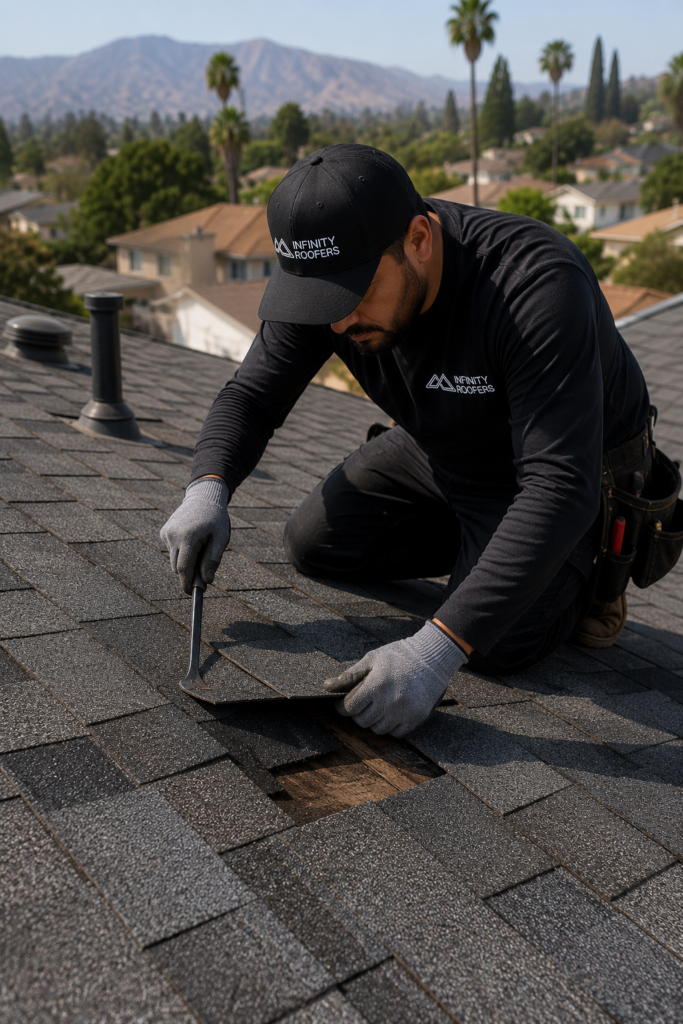
We start by understanding your goals, inspecting your roof, and providing a detailed written estimate. This includes project photos, timelines, and material options. The estimate is built on the drivers above: measured squares, the system you choose, the layers and decking we find, and the fire and energy rules for your address.
After the work is complete, we conduct a final walkthrough to review the finished project with you. We clean the work area, address any remaining questions, and provide your warranty documentation.
Homeowners in Simi Valley and across Ventura County, in Canoga Park and the western San Fernando Valley, and in Pasadena and nearby San Gabriel Valley communities reach the same team through one contact page. You can also see the towns we serve.
Questions homeowners ask about roof replacement cost
Does a new roof cost more in Simi Valley than in Oxnard?
It can, and mostly for code reasons. Simi Valley is in climate zone 9 and about two-thirds of its land is in a Very High fire hazard zone, so a full replacement there may need a reflective steep-slope product (unless an exception applies), R-14 insulation on a flat roof, and a Class A assembly with ember protection under tile and metal valleys. Oxnard is in climate zone 6, with no steep-slope reflectance minimum and no added flat-roof insulation from that table, and none of its land is in a Very High zone.
Can I put a new roof over the old one to save money?
Only in some cases. The California Residential Code does not allow a roof recover over a water-soaked or deteriorated roof, over slate, clay or cement tile, or over a roof that already has two or more layers. Where a recover is allowed, it still has to follow the roofing manufacturer’s instructions.
Why would the price change after the old roof comes off?
Because the deck is hidden until then. Rotted or delaminated sheathing, spaced boards and rusted flashing only show during tear-off. Ask for a per-sheet decking price in the contract so any change is priced in advance.
Does a Class A fire-rated roof cost more?
Inside a fire hazard zone, the extra cost sits in the assembly more than in the roofing product. Many shingle, tile and metal products qualify as Class A, but the Wildland-Urban Interface Code also asks for a 72 lb cap sheet or Class A-tested underlayment under tile and similar profiles on a wood deck, bird stops, mudded hip and ridge caps and 26-gauge valley metal over a cap sheet. Replacing a wood shake roof, which is not Class A, changes the system entirely. Ask for the manufacturer’s classification certificate; the installer must give it to you.
Is the permit included in a roof replacement quote?
It should be stated either way. The CSLB says the contract should say who gets the building permits. Fees are set by your city or by Ventura County for unincorporated addresses, so ask whether the quoted price includes them.
Is there a grant that helps pay for a fire-safe roof?
A state program exists in law but was not taking applications when we last checked. Our guide to the California Safe Homes grant for a new roof explains who would qualify, what it would pay for and where it stands.
Sources
- California Energy Commission, 2025 Building Energy Efficiency Standards, section 150.2(b)1I, and the climate zone assignments by ZIP code (read October 3, 2026).
- California Health and Safety Code section 13132.7 (read October 3, 2026).
- 2025 California Residential Code, chapter 9, sections R902.1.1 and R902.1.2 (fire classification) and R908 (reroofing) (read October 3, 2026).
- 2025 California Wildland-Urban Interface Code, chapter 5, sections 504.2, 504.2.1, 504.2.2 and 507.1, and chapter 1, section 1.1.2 (read October 3, 2026).
- California Department of Insurance, Safer from Wildfires (read October 3, 2026).
- Office of the State Fire Marshal, Fire Hazard Severity Zones (read October 3, 2026).
- Ventura County Building and Safety, building permit information; City of Simi Valley, online permit submittal instructions (read October 3, 2026).
- Contractors State License Board, contracts and binding agreements (read October 3, 2026).
- U.S. Census Bureau, American Community Survey 2024 5-year estimates, table B25035 median year structure built.
Want the real number for your roof? Request a written estimate. If you are also planning the paperwork, read the permit guide next.